
The Fast Facts
- Over-the-counter cold and flu medications can help relieve symptoms such as sore throat, cough, runny nose, fever, and chest congestion.
- CVS Pharmacy offers a range of cold and flu products, including those from its own CVS Health brand.
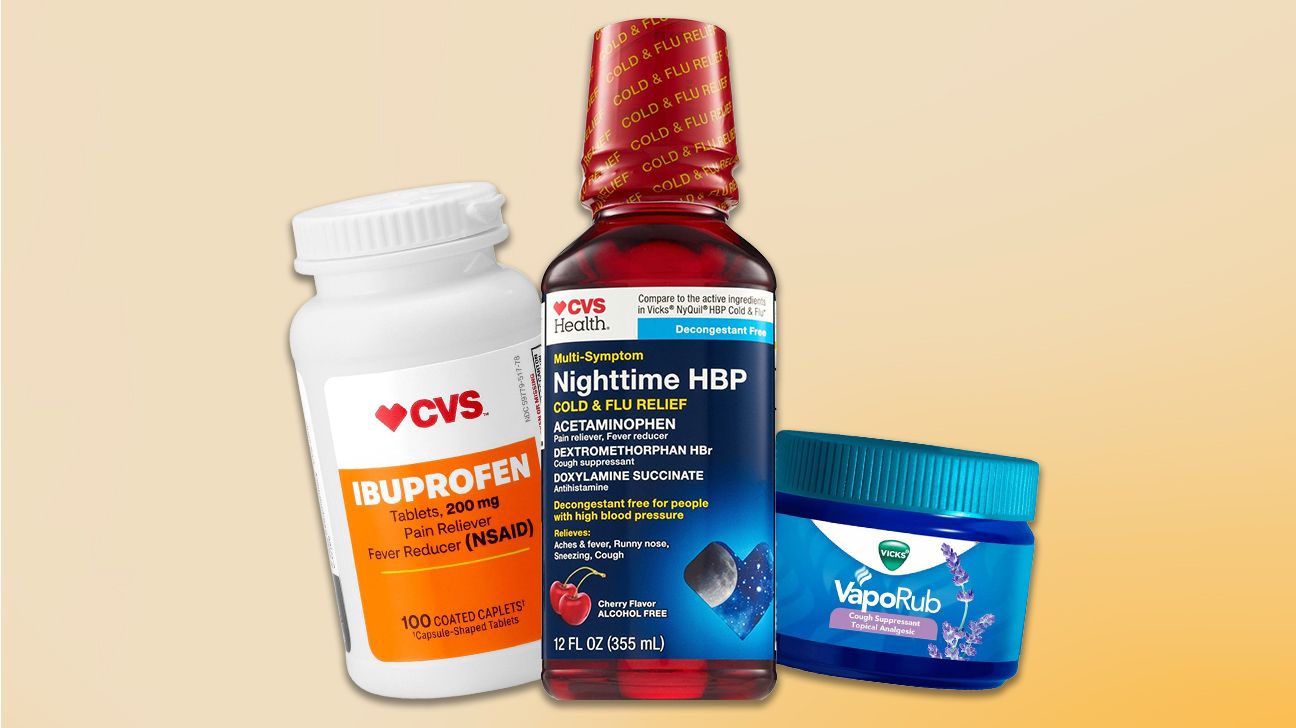
- A good option for nighttime relief is CVS Health’s Multi-Symptom Nighttime HBP Cold & Flu Relief, which contains acetaminophen, dextromethorphan, and doxylamine succinate.
-
Best for nighttime relief: CVS Health Multi-Symptom Nighttime HBP Cold & Flu Relief | Skip to review
-
Best for sore throat and cough: Cepacol Extra Strength Sore Throat & Cough Lozenges | Skip to review
CVS stocks a wide range of cold and flu products to help relieve common symptoms, including sore throat, cough, runny nose, fever, and chest congestion.
From lozenges and liquids to tablets, topical rubs, and kid-friendly or non-drowsy formulas, there are various over-the-counter options to suit different needs.
Discover our pick of the best cold and flu products at CVS below, plus further tips for managing cold and flu symptoms.
(adults and children ages 12+)
• dextromethorphan HBr (30 mg)
• doxylamine succinate (12.5 mg)
(adults and children ages 12+)
(adults and children ages 12+)
• dextromethorphan HBr (5 mg)
(for children ages 6 to 11 years, who weigh 48 to 95 lb)
• chlorpheniramine maleate (1 mg)
• dextromethorphan HBr (5 mg)
(adults and children ages 12+)
• pseudoephedrine HCl (120 mg)
• guaifenesin (200 mg)
(adults and children ages 2+)
• eucalyptus oil
• menthol
All brands and products we feature undergo our thorough Healthline vetting process.
For this roundup, we considered the following factors:
- Symptoms: We selected products that target common cold and flu symptoms, including cough, congestion, sore throat, fever, and body aches.
- Ingredients: We considered the active ingredients, their intended uses, and whether the product contains multiple ingredients that target different symptoms.
- Drowsiness: We noted whether products may cause drowsiness to help readers choose options suited to their needs, including daytime and nighttime use.
- Price: We strived to include relatively affordable options.
- Ease of use: We considered the product form, dosage instructions, and how easy the medication is to take or use.
- Safety: We reviewed product warnings, potential side effects, and relevant considerations for people with common health conditions, such as high blood pressure.
- User reviews: Healthline examines user reviews to understand how existing customers perceive the products and brand.
- Brand reputation: We always do our best to show reputable brands. For example, we verify that every brand complies with labeling requirements set by the Food and Drug Administration (FDA).
The National Health Service (NHS) in the United Kingdom (U.K) recommends the following for managing the common cold:
- get plenty of rest
- drink lots of fluid, such as water, to avoid dehydration
- eat healthy food (it’s common for small children to lose their appetite for a few days)
- gargle salt water to soothe a sore throat (not suitable for young children)
- drink a hot lemon and honey drink to soothe a sore throat
- breathe in steam to ease a blocked nose – try sitting in the bathroom with a hot shower running
Similarly, for the flu, the NHS suggests the following:
- get lots of rest and sleep
- take acetaminophen or ibuprofen to lower temperature and reduce aches and pains
- give acetaminophen or ibuprofen to your child if they are uncomfortable (check the packaging to make sure the medication is suitable for your child)
- drink lots of water to avoid dehydration
Some cold and flu home remedies may help relieve symptoms, too, though research is limited.
Yes, CVS sells at-home flu antigen tests that can detect influenza A or B, the viruses that cause the flu.
Influenza A and B can cause similar respiratory symptoms, although influenza A is more commonly associated with widespread seasonal outbreaks and pandemics. Both types can cause serious illness, particularly in people at higher risk of flu complications.
Yes, CVS offers delivery for cold and flu medications, including over-the-counter and some prescription medications. In many areas, you can order online for same-day delivery if you cannot visit a store. Delivery availability and fees vary by location.
Yes, CVS nighttime cold and flu products can make you sleepy. Most of their nighttime formulas contain doxylamine, an antihistamine that can cause drowsiness. You should avoid driving or operating machinery after taking it, and follow the product’s dosing instructions.
CVS offers a range of over-the-counter cold and flu products designed to relieve different symptoms, from cough and chest congestion to fever, aches, sore throat, and sinus pressure.
The right option for you will depend on your symptoms, age, health conditions, and any other medications you take.
Before taking a cold or flu medication, check the Drug Facts label for active ingredients, dosing instructions, and warnings.
Avoid combining products with the same active ingredients, such as acetaminophen, unless a healthcare professional advises you to do so.
Alongside medication, getting plenty of rest and fluids may help you manage cold and flu symptoms while your body recovers.
Source: https://www.healthline.com/health/flu/best-cold-and-flu-products-at-cvs